You filed your claim. Weeks went by. Then a letter or an automated call showed up telling you to report for a C&P exam at some clinic across town, on a date you didn't pick, with a provider you've never met. If your stomach dropped a little, that's normal. A lot rides on this appointment, and the VA doesn't exactly hand you a manual on the way in.
So here's the manual. What a C&P exam is, what the examiner is really writing down, the one mistake that sinks otherwise-solid claims, and what you can do if the exam comes back rushed or flat-out wrong.
What a C&P exam actually is
C&P stands for Compensation and Pension. After you file a claim or an appeal, the VA usually orders one of these exams to size up your condition. Sometimes a VA provider does it. More often these days it's a contractor working for the VA - companies like QTC, LHI, or VES. Either way, the appointment exists for one reason: to generate a report the VA's rater will use to decide your claim.
That's the part most veterans don't realize walking in. This isn't a treatment visit. The examiner isn't there to help you feel better, prescribe anything, or build a long-term relationship. They're there to document. Twenty minutes, sometimes less, and you may never see that person again.
Who's in the room, and who isn't your doctor
The examiner is a clinician - a doctor, nurse practitioner, PA, or psychologist depending on the condition. They're not your treating physician, and they haven't lived with your file. A lot of them are seeing a dozen veterans that day and have read very little of your record before you sat down.
That cuts both ways. A good examiner documents what they see honestly. A rushed or careless one writes "within normal limits" on a day you happened to function, and that single line can outweigh years of treatment notes. You can't control which one you get. You can control what you bring and what you say.
What the examiner is really scoring
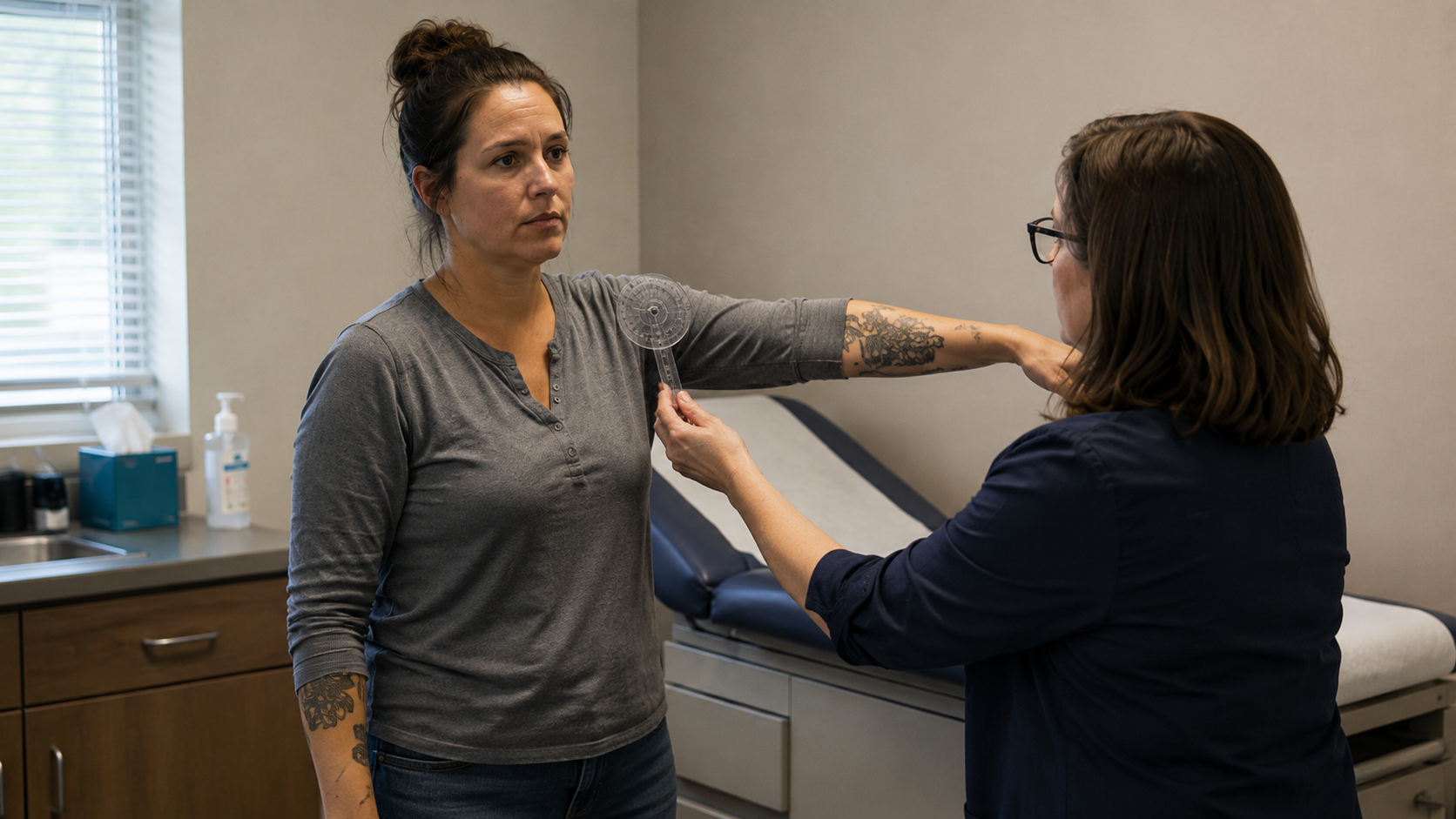
The examiner fills out something called a DBQ - a Disability Benefits Questionnaire. It's a standardized form for each condition, full of checkboxes and ranges. Range of motion in degrees. Frequency of episodes. Functional limits. The rater back at the regional office takes those answers and maps them to a percentage in the rating schedule. If you've ever wondered why the math feels disconnected from how you actually feel,
here's how the VA's rating math really works.
Some exams go further and ask for a medical opinion on cause - whether your condition is connected to service. That opinion gets written in a specific legal register, and it's the hinge a lot of claims swing on. If your claim depends on linking a current condition back to something in service, the examiner's opinion can matter as much as a
private nexus letter. Sometimes more.
The mistake that sinks good claims
Veterans are trained to suck it up. Push through, don't complain, you're fine. That instinct, in a C&P exam, can cost you your benefits.
When the examiner asks how you're doing, the honest answer for a lot of guys is "fine, considering." Don't do that. The rating isn't built on your best day or your average day. It's built on the real picture, flare-ups included - the days you can't get out of bed, the range of motion that collapses after you've used the joint, the panic that shows up in a crowd. If you only describe the good hours, that's the claim you'll get rated on.
The flip side matters too. Don't exaggerate. Examiners are paid to notice inconsistencies, and one stretched answer can sink your credibility on everything else. Tell the truth about your worst days, plainly, with examples. "I drop things three or four times a week." "I've missed nine days of work in the last two months." Specifics beat adjectives.
If you've got buddies or family who've watched this play out, their written statements carry real weight too.
Here's how to put a buddy letter or personal statement together so the examiner and the rater see the same picture you live with.
C&P exams for PTSD and mental health
Mental health exams run differently, and they're harder. You're being asked to walk a stranger through the worst things that happened to you, on a clock, so they can check boxes about your symptoms and how much they interfere with work and daily life. It's a lot to ask of anyone.
A few honest things to know going in. The examiner is assessing severity - how your symptoms affect your ability to function, hold a job, sleep, keep relationships together. The rating criteria for mental health conditions reference serious symptoms, including suicidal thinking, so the questions can get heavy fast. Answer them truthfully. Underplaying what you're carrying doesn't protect you here; it just produces a lower rating than your reality.
If your symptoms keep you from holding down steady work, that's its own avenue worth understanding - total disability based on
individual unemployability (TDIU) exists for exactly that situation. And if you want the fuller picture of how the VA handles these claims, start with
PTSD and the VA.
If you're struggling right now, you don't have to wait for a claim to resolve to get help. The Veterans Crisis Line is free, confidential, and open 24/7, whether or not you're enrolled in VA health care. Dial
988 then press 1, text
838255, or chat at
VeteransCrisisLine.net/Chat.
What if the exam was rushed, wrong, or biased?
This happens more than the VA likes to admit. The exam lasted four minutes. The examiner never touched the joint they measured. The report says your condition "resolved" when you're still living with it every day. Or the opinion contradicts your own treatment records without explaining why.
A bad exam isn't the end of the road. First, get a copy - you're entitled to your claims file, and you want to see exactly what the examiner wrote. If the exam was inadequate or the reasoning doesn't hold up, that's something you can challenge directly. You can also get an opinion from your own provider or a private examiner and put it back in front of the VA.
This is where a lot of veterans come to us - not before the exam, but after a denial built on a lousy one. The VA has an obligation to give you an adequate exam, and when it doesn't, that failure can become the backbone of an
appeal. The point is, a weak C&P report is a problem you can attack, not a verdict you have to accept.
What happens if you miss it
Don't. If you skip a C&P exam without rescheduling, the VA can decide your claim on whatever's already in the file - and "whatever's already in the file" is usually why you needed the exam in the first place. Life happens, and you can reschedule if you have good reason. But a no-show with no explanation is one of the easiest ways to hand the VA a denial.
Before you walk in
A short, honest prep beats cramming. Reread your own claim so you remember what you said. Jot down concrete examples of how the condition affects your work and your day - frequency, missed days, things you can't do anymore. Bring a list of your medications and treatment. And answer the questions you're actually asked, truthfully, including the bad days you'd normally keep to yourself.
You earned the right to be heard in that room. Make sure the report reflects the veteran who actually showed up.
If your claim already went sideways
If you've already had a C&P exam and the decision didn't match your reality, that's fixable more often than people think. We're a veteran-led firm, and we spend our days unwinding denials and lowball ratings built on exams that got it wrong. By law we can't charge to file your initial claim - where we come in is after a decision, when it's time to push back. If that's where you are,
reach out and we'll take an honest look at what happened.