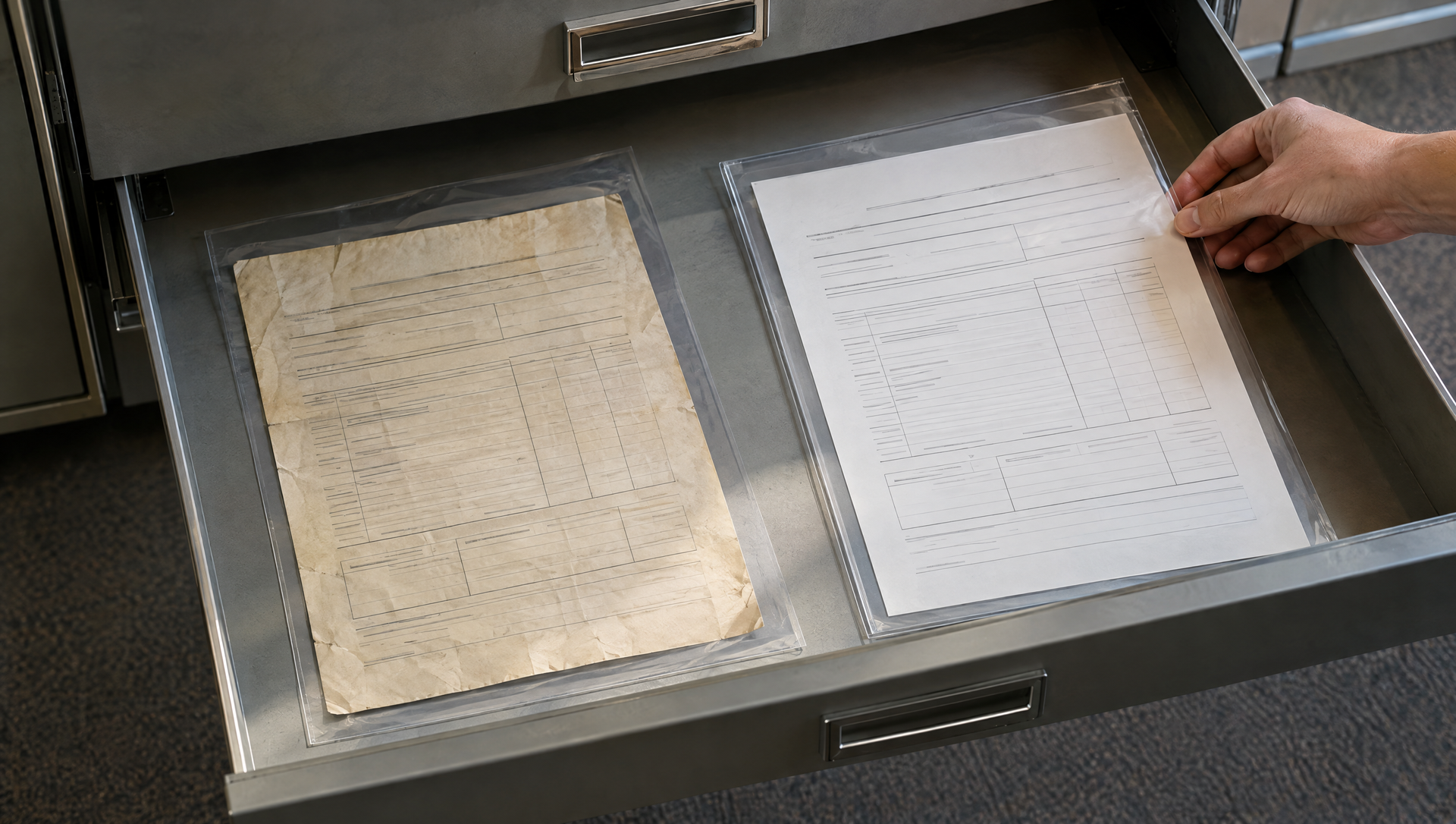
Here's a scenario thousands of veterans know without knowing its name. You file for two things, say PTSD and unemployability. The decision comes back rating the PTSD and saying nothing at all about the TDIU. Not granted, not denied, just silence. Under a court-made rule called the implicit denial doctrine, that silence could count as a denial, your appeal clock could start running on a decision you were never told about, and by the time you figured it out, the deadline was gone.
In February 2026, the Federal Circuit shut that down. In Hamill v. Collins, the court held that under the Appeals Modernization Act, the VA can no longer implicitly deny anything. If the VA didn't explicitly address your claim in its decision, the claim wasn't decided. And a claim that was never decided may still be pending, with everything that implies about your
effective date and back pay.
What the court actually held
David Hamill, a Marine veteran, spent years seeking benefits complicated by an other than honorable discharge. He asked the VA to revisit its character of discharge determination; the VA decided other issues and never addressed that one. When he went to court to force a decision, the VA argued it had already denied him implicitly. The Federal Circuit disagreed, holding that the AMA's heightened notice requirements leave no room for silent denials. In the court's words, no veteran can appeal a decision he doesn't understand to have been made.
The practical rules that fall out of it: the implicit denial doctrine is gone for AMA-era decisions, generally those issued on or after February 19, 2019. The VA must explicitly identify every issue it decides. And an issue the VA skipped may still be an open, unadjudicated claim.
Why this matters to you
Three groups should sit up.
Veterans with an ignored issue in a post-2019 decision. If you claimed several things and the decision only addressed some of them, the skipped ones may never have been decided at all. That's not a missed deadline; that's a claim still sitting open, potentially with its original filing date intact.
TDIU claimants especially. Unemployability is frequently raised by the evidence rather than by a separate form, which made it the single most common victim of silent denials. If your record showed you couldn't work and the VA rated your conditions without ever addressing
TDIU, Hamill gives that omission teeth.
Anyone told they "missed the appeal window" on a claim they never saw denied. Under the old doctrine, the VA could argue your clock started at the implicit denial. If the denial was never explicit, that argument just got much weaker.
None of this is automatic. Someone has to go back through the decisions, match what was claimed against what was actually adjudicated, and put the unaddressed issue back in front of the VA. But that's exactly the kind of file review that turns up money.
The companion case: Freund v. Collins
Hamill isn't the only Collins case moving this year, and the second one reaches much further back. In March 2026, the Court of Appeals for Veterans Claims certified Freund v. Collins as a class action covering veterans in the old legacy appeals system whose timely substantive appeals were closed without ever being processed. The certified class spans appeal files closed between December 1990 and early 2026, and the parties have proposed a settlement the court will review at a fairness hearing in August 2026.
The short version for veterans: if you filed a VA Form 9 substantive appeal in the legacy system, before February 2019, and your appeal simply vanished, closed without a Board decision, you may be a class member, and the settlement process may reopen what the system dropped. Watch that case, and if it describes you, don't wait for the VA to find you.
The pattern worth seeing
Put the two cases side by side and the theme is the same: claims and appeals that died of silence rather than decision. Courts are now forcing the VA to account for both. If you've got a decision in your file that never mentioned something you claimed, or an old appeal that evaporated without an answer, this is the year those files deserve a second read.
Where we come in
We're a veteran-led firm, and our core work is
VA appeals, including the buried issues these rulings just brought back to the surface. By law we can't charge to file an initial claim; we come in after a decision, or in Hamill's world, after a non-decision that should have been one. If your file has silence where an answer should be,
reach out and we'll go find it.