If you applied to upgrade your discharge, told the board about your PTSD or your TBI or what happened to you in service, and got a denial that barely acknowledged any of it, you probably walked away assuming the system had looked at your case and judged it fairly.
Here's what came out in federal court: for years, the discharge review boards weren't holding up their end. Veterans sued each of the major branches over it, and each branch ended up agreeing to go back and redo thousands of decisions. That history matters, because if your denial came out of that era, it may sit on exactly the kind of review the courts found wanting.
The rule the boards were supposed to follow
Start with the standard. In 2014, the Secretary of Defense directed the discharge review boards to give what's called liberal consideration to upgrade requests involving PTSD and related mental health conditions. The idea was overdue and simple: mental health conditions affect behavior, so misconduct can be a symptom of the very condition a service member was never treated for, and the boards have to weigh whether the condition explains or mitigates what led to the discharge. Later guidance extended that approach to TBI,
military sexual trauma, and other mental health conditions, and Congress wrote liberal consideration into federal law in 2016.
So by the mid-2010s, this wasn't a suggestion. It was binding policy, then statute. The problem was what the boards actually did with it.
What the lawsuits found
Veterans and advocates started noticing that the denial rates didn't move the way a real policy change should move them. Applications kept going in with documented
PTSD, TBI, and MST, and denials kept coming back that either ignored the conditions or brushed past them without applying the standard. So they sued, branch by branch, and the numbers that came out in court told the story.
Army. In Kennedy v. McCarthy, Iraq and Afghanistan era veterans challenged the Army Discharge Review Board's systemic failure to properly weigh mental health conditions. The Army settled in 2021. Under the settlement, the ADRB agreed to automatically reconsider a decade of adverse decisions, going back to April 2011, and to give veterans denied between 2001 and 2011 fresh reapplication rights.
Navy and Marine Corps. In Manker v. Del Toro, veterans challenged the Naval Discharge Review Board, which at the time was denying roughly 85 percent of the applications in front of it. The Navy settled, with final approval in 2022, agreeing to automatically re-review denials going back to March 2012 where the application raised PTSD, TBI, or related conditions, and to reform how the board documents and decides these cases.
Air Force and Space Force. In Johnson v. Kendall, the same challenge reached the Air Force Discharge Review Board, where the complaint cited a 72 percent denial rate in cases raising PTSD, TBI, or other mental health conditions even after liberal consideration became law. That case settled too, with the court approving an agreement in 2023 that requires re-review of affected decisions and reform of the board's process.
Three branches, three courts, one pattern. The settlements don't mean every denial was wrong. They mean the process itself couldn't be trusted to apply the standard, at scale, for years.
Why this matters if you were denied
Here's the practical takeaway, and it's bigger than the class actions themselves.
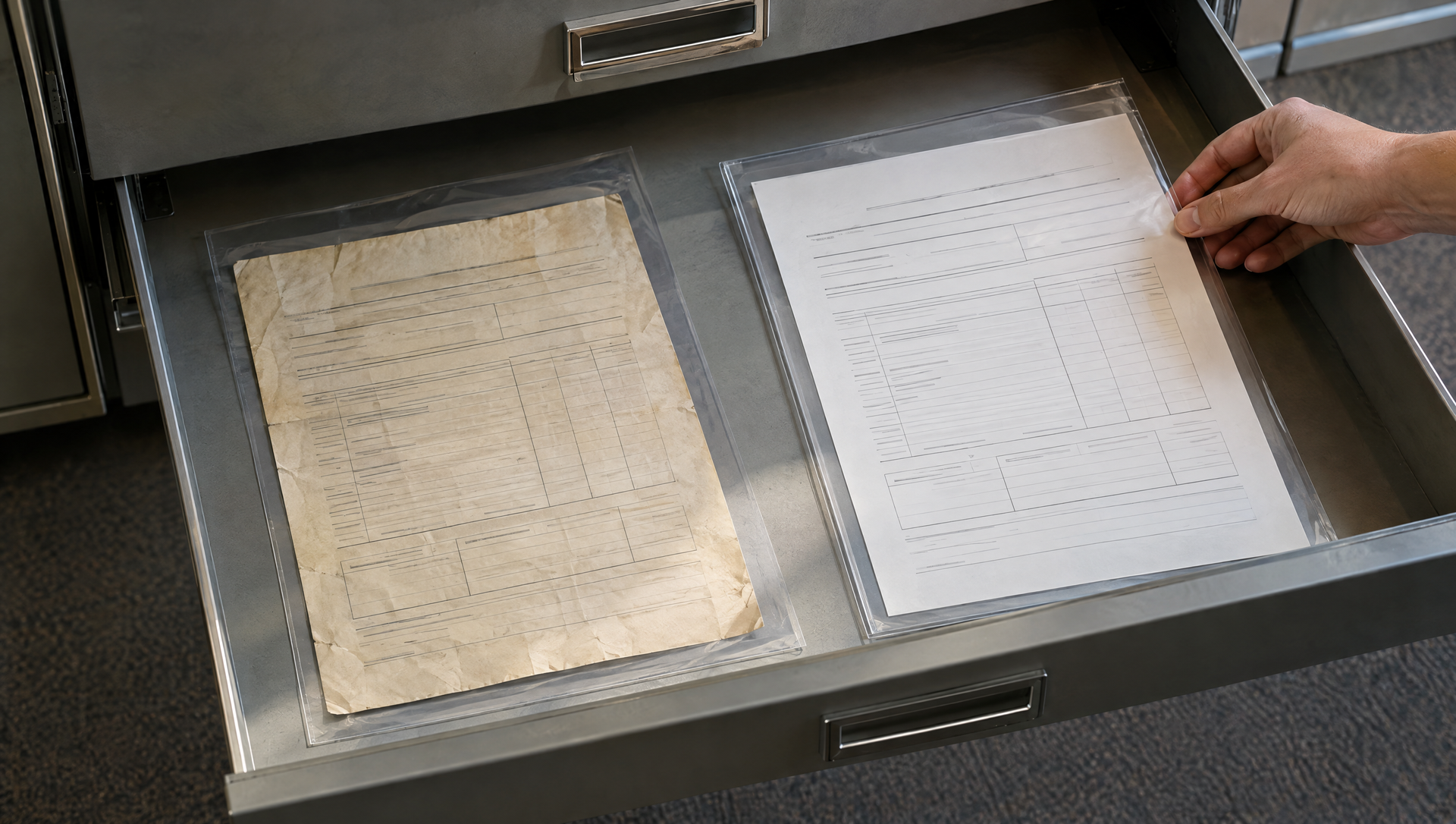
Your old denial may have been reconsidered, or may be eligible for it. Each settlement created automatic re-review for certain denials and expanded reapplication rights for others, with the covered windows varying by branch. If you applied to the ADRB, NDRB, or AFDRB in the 2010s with a mental health condition in the record and got denied, it's worth finding out where your case falls. Some veterans have already been re-reviewed without ever asking.
A pre-settlement denial isn't proof your case is weak. This is the part veterans need to hear most. If the board that denied you was later found to be systematically shortchanging cases like yours, then your denial tells you a lot about the board and very little about your case. Plenty of veterans took one denial as the final verdict and never applied again. That conclusion deserves a second look.
The standard has real teeth now. Liberal consideration means a formal in-service diagnosis isn't required, your own account carries evidentiary weight, and the board must grapple with whether the condition mitigates the misconduct rather than judging the conduct in a vacuum. The litigation forced the boards to document that analysis. A new application, built to that standard, lands in a different environment than the one that denied you years ago.
And the boards still get it wrong. Court-ordered reform improves a process; it doesn't perfect one. When a board today waves off a well-documented mental health condition, that's not the end either. Denials can be taken up to the Board for Correction of Military Records, and the
records-correction system has its own avenues when a board fails to apply the law it's bound by.
What a strong application looks like now
The litigation-era lesson is that these cases are won by making the connection impossible to ignore. That means the diagnosis or symptoms documented wherever they exist (service records, VA records, civilian providers, or your own detailed statement), a clear account of how the condition connected to the conduct behind the discharge, and statements from people who saw the change in you. The board is required to weigh all of it liberally. Your job, or your advocate's, is to build a record where applying the standard honestly leads to one answer.
If you're starting from scratch,
our walkthrough of how discharge upgrades work covers the boards, the forms, and the timelines. This post is the layer underneath it: why the deck was stacked for a long time, and why it's less stacked now.
If any of this touches your own story and you're struggling, support doesn't have to wait on a board's decision. The Veterans Crisis Line is free, confidential, and available 24/7, whether or not you're enrolled in VA care: dial
988 then press 1, text
838255, or chat at
VeteransCrisisLine.net/Chat.
If your denial deserves a second look
We're a veteran-led firm, and
discharge upgrades and records corrections are part of our core work, including cases the boards got wrong the first time. We know the liberal consideration standard, we know what the settlements changed at each branch, and we know how to build the application that forces a board to engage with the condition instead of stepping around it. If you were denied an upgrade with PTSD, TBI, or MST in your story,
reach out and we'll give you an honest read on whether your case deserves another run.