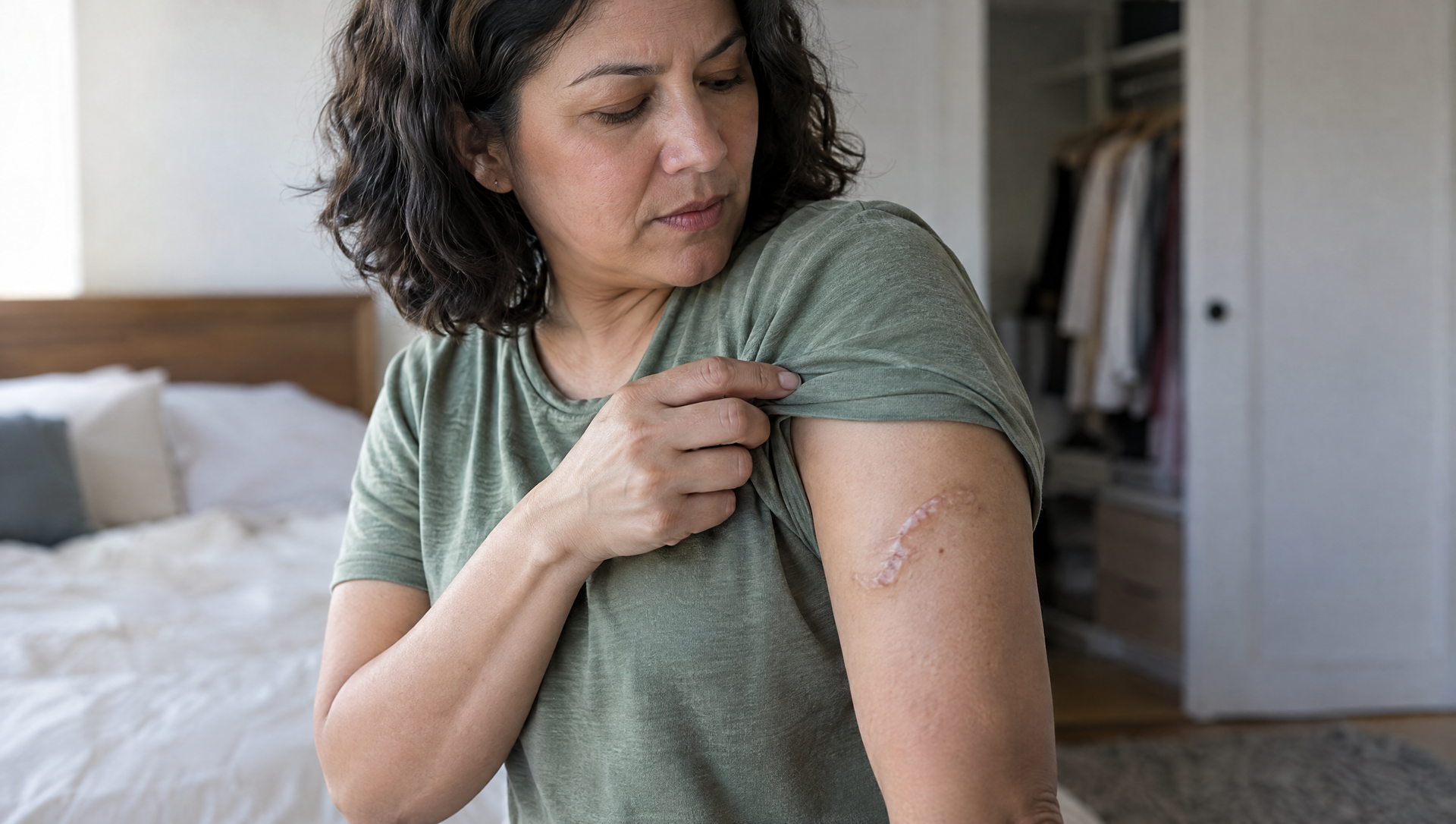
More than half a million veterans receive compensation for painful scars, usually the small 10% rating that follows a surgery or a shrapnel wound. On Wednesday the VA's inspector general
published a review estimating that about 38% of the scar decisions the VA made between June 2024 and May 2025, roughly 17,900 of them, contained at least one error.
Stars and Stripes and
Military Times carried the numbers. The VA disputed the sample size and then said it will "re-examine any incorrect decisions the OIG identified" in the coming months.
If one of those decisions is yours, that sentence is the one to pay attention to.
What the rule says
Painful scars are rated under a single diagnostic code, 7804, and the rating turns on how many scars qualify: one or two painful or unstable scars is 10%, three or four is 20%, five or more is 30%. A scar that is both unstable and painful gets an extra 10%. That's the whole code.
The word the OIG focused on is "painful." Under the regulation, a scar is painful when the medical evidence shows objective evidence of tenderness to the touch. A veteran telling the examiner the scar hurts is not enough on its own. The examiner has to press on it and record what happened. The OIG found that claims processors were granting the rating on the veteran's report alone, with no exam finding to back it, in an estimated 7,400 decisions.
The second error was counting. The code is written so that all of a veteran's painful scars are rated together under one 7804 entry, with the percentage set by the total count. The OIG found about 5,500 decisions where the VA assigned separate 7804 ratings for separate scars, which stacks ratings for the same thing, a practice the schedule prohibits as pyramiding. The third error ran the other way: about 1,300 decisions where a scar that was already service-connected became painful and the VA didn't assign the separate evaluation it should have.
Which way this cuts
Unlike
the reduction report we covered last week, the errors here mostly favored the veteran. The OIG found no underpayments. It estimated at least $5.6 million in overpayments, with a point estimate closer to $12.5 million, and said the overpayments keep accruing until the VA corrects the decisions.
So the VA's re-examination will, for most of the affected veterans, be a move toward reduction. Two things follow from that.
First, a reduction has to follow the due-process sequence: a proposal letter explaining the evidence, 60 days to respond, 30 days to request a hearing that pauses the cut, and an effective date that honors the full notice period.
That's the sequence the OIG found broken a third of the time in its August report. The same agency that misrated the scars is about to run thousands of reductions through a process it's documented as error-prone.
Second, a scar rating granted on your word alone isn't necessarily wrong, only unsupported. If your scar is tender to the touch, the fix is an exam that says so, not a reduction. If you get a proposal letter, the response is a current examination, VA or private, where the examiner palpates the scar and documents the result. That single finding is the difference between keeping the rating and losing it.
The 10% that's worth more than it looks
A 10% scar rating looks minor until you remember
how VA math works. For a veteran sitting at 88% combined, the scar rating is what rounds to 90%. For a veteran at 94%, it's the difference between 90% and 100%. And a separate painful-scar rating from a service-connected surgery is often the first secondary condition a veteran ever claims, which is why the VA processes more than 47,000 of them a year.
The counting rule works in your favor too. If you have five painful scars from a single IED blast and you're rated 10%, you're underrated, and the OIG's third error category describes you. The code is 30% at five.
What the VA is changing
The VA agreed to all three OIG recommendations: correct the errors (target date February 2027), revise the scars examination form so examiners document objective tenderness (a revised form is tentatively scheduled for January 10, 2027), and retrain staff (target January 2027). The new form is the quiet part that affects every future scar claim. After it's in use, a C&P examiner who skips the palpation step will leave a blank on the form, and a blank is a denial.
If you're filing a scar claim now, don't wait for the form. Ask your examiner to palpate the scar and say so in the report, and if you have a private provider, get the same finding in writing before the exam.
Where we come in
We're a veteran-led firm, and a scar rating is a small claim that sits inside a big one. If a proposal to reduce arrives, or if you've been counting your scars and the number doesn't match your rating,
reach out.