If you’ve filed a VA claim and found yourself checking the status page like it’s going to suddenly confess its secrets, you’re not alone. A lot of veterans log in, see the same phase sitting there for weeks, and assume nothing’s happening. Sometimes that’s true. Sometimes it isn’t. The problem is that the tracker gives you just enough information to keep you hopeful, but not quite enough to make the process feel sane.
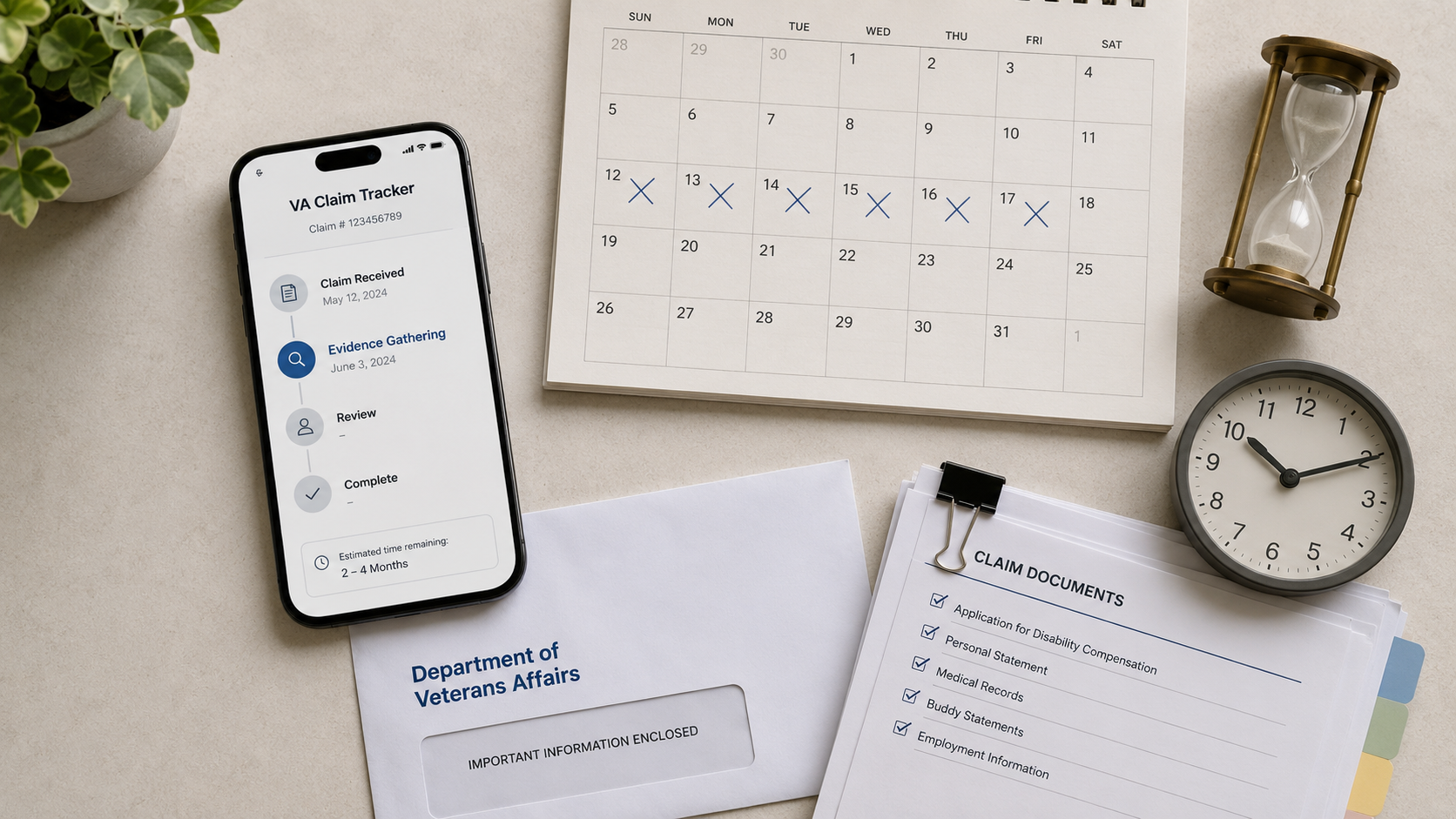
The good news is that the VA’s online claim status tool can tell you more than people think. You can use it on VA.gov after signing in, and VA also lets you check certain benefits information through its Health and Benefits app. The tool is supposed to show where your claim is in the process, what type of claim it is, what conditions you claimed, whether the VA has asked for more evidence, and in some cases what documents have been uploaded.
That sounds helpful on paper. In real life, it usually feels more like reading a weather forecast that says “conditions developing.”
The status tracker isn’t really a crystal ball. It’s a rough snapshot of where your file is sitting in the VA’s system. If you’re expecting it to tell you exactly what the rater thinks, whether your exam was any good, or whether your nexus evidence actually landed with the person deciding the claim, it won’t. It just won’t. That isn’t what the system was built to do.
Most disability claims move through a series of basic stages. First, the VA receives the claim. Then it goes into initial review. After that, it usually sits in evidence gathering, review, and decision, which is the stage that makes people lose their minds because it can take a long time and can mean a lot of different things. From there, if the VA has made a decision, the claim moves into preparation for notification, and then finally to complete. The VA’s own explanation also notes that a claim can move backward or stay in one phase for a while, especially during evidence development.
That middle stage is where most of the confusion lives. “Evidence gathering, review, and decision” sounds like one clean step. It isn’t. It can mean the VA is waiting on treatment records. It can mean they’re scheduling a C&P exam. It can mean they got the exam and nobody’s looked at it yet. It can mean a reviewer kicked it back for more development. It can mean the claim is moving. It can also mean the claim is sitting on a desk while the government continues its long-standing tradition of making simple things weird.
So when should you worry?
You should pay attention when the tracker shows that the VA is waiting on something from you, when they’ve requested records you know are important and those records still haven’t shown up, or when you missed or never got notice of a C&P exam. You should also care if the claim looks “stuck” for months and you know there’s missing evidence, because sometimes the system doesn’t fix itself. Veterans are often told to just be patient. Patience has its place. So does making sure your claim isn’t quietly drifting into a bad decision.
It also helps to know what the tracker can’t tell you. It won’t tell you whether your personal statement was persuasive. It won’t tell you whether the examiner got the facts wrong. It won’t tell you whether the VA is about to underrate you. And it definitely won’t tell you whether the decision they’re building is legally sound. A claim can look perfectly normal in the tracker and still be headed straight toward a denial that never should’ve happened.
That’s why veterans get tripped up by the status page. They treat movement as good news and silence as bad news. But that’s not always how this works. Sometimes a fast-moving claim ends in a bad decision because the VA rushed through weak development. Sometimes a slow claim eventually gets granted because the record was built the right way. The tracker tells you where the file is. It doesn’t tell you whether the file is being handled correctly.
The smarter way to use the claim tracker is as a tool, not a source of comfort. Check whether the VA has asked for anything. Check whether documents were uploaded. Check whether an exam appears to have happened. Check whether the status suddenly changed after weeks of nothing. Then compare that with what you know about your own case. If the record is thin, the tracker won’t save you. If the VA is developing the wrong issue, the tracker won’t fix that either.
And one more thing that deserves saying out loud. “Preparation for notification” does not mean you won. It means a decision was made and the VA is getting ready to send it. That’s it. Plenty of veterans see that phase and start celebrating early. Then the letter shows up and ruins everybody’s afternoon. The tracker is useful, but it isn’t a sneak preview of victory.
If you’re using the tracker and something feels off, trust that instinct. A lot of bad VA outcomes start with a veteran assuming the system must know what it’s doing. Sometimes it does. Sometimes it absolutely doesn’t. If your claim has been dragging, if the VA is asking for things that make no sense, or if you’re worried the record isn’t being developed the right way, that’s usually the moment to get help before the decision lands instead of after.
At Valor Veterans Law, we help veterans figure out what’s actually going on behind those vague status updates and, more importantly, what to do about it. Because “evidence gathering” sounds nice until you realize nobody’s gathering the evidence that actually matters.