If you’ve spent any time online lately, you’ve probably seen veterans talking about major VA disability rating changes. Sleep apnea. Tinnitus. Mental health. Medication. Reductions. Whether a CPAP still gets 50 percent. Whether tinnitus is going away. Whether taking medication can hurt your rating.
Some of the concern is real. Some of it is internet panic dressed up as legal advice. The problem is that most veterans don’t have time to read proposed federal rules, VA announcements, and comment threads full of people confidently misunderstanding both.
So here’s the bottom line:
as of April 2026, the biggest proposed changes to VA ratings for sleep apnea, tinnitus, and mental health have not been finalized. The current rating criteria still apply unless and until VA publishes final rules changing them. VA did propose rating schedule updates for respiratory, auditory, and mental health conditions back in 2022, but proposed does not mean final.
That said, veterans shouldn’t ignore this. Proposed rules can eventually become final rules. And if you have a valid VA claim, waiting around for the internet to calm down is not a strategy. That day is not coming.
What VA Rating Changes Are On the Table?
The big ones involve four areas:
Sleep apnea. Tinnitus. Mental health conditions. Medication or treatment-controlled disabilities.
Each one matters for a different reason. Sleep apnea matters because many veterans currently receive a 50 percent rating when they require a CPAP or similar breathing device. Tinnitus matters because it’s commonly rated at 10 percent as a standalone condition. Mental health matters because VA proposed a major change to how those conditions are evaluated. Medication matters because VA briefly issued a rule in February 2026 that caused serious concern about whether treated conditions could be rated lower.
That medication rule was rescinded on February 27, 2026, and VA restored the prior regulatory text. Still, the fact that it happened at all is why you should be paying attention.
Is VA Changing the Sleep Apnea Rating?
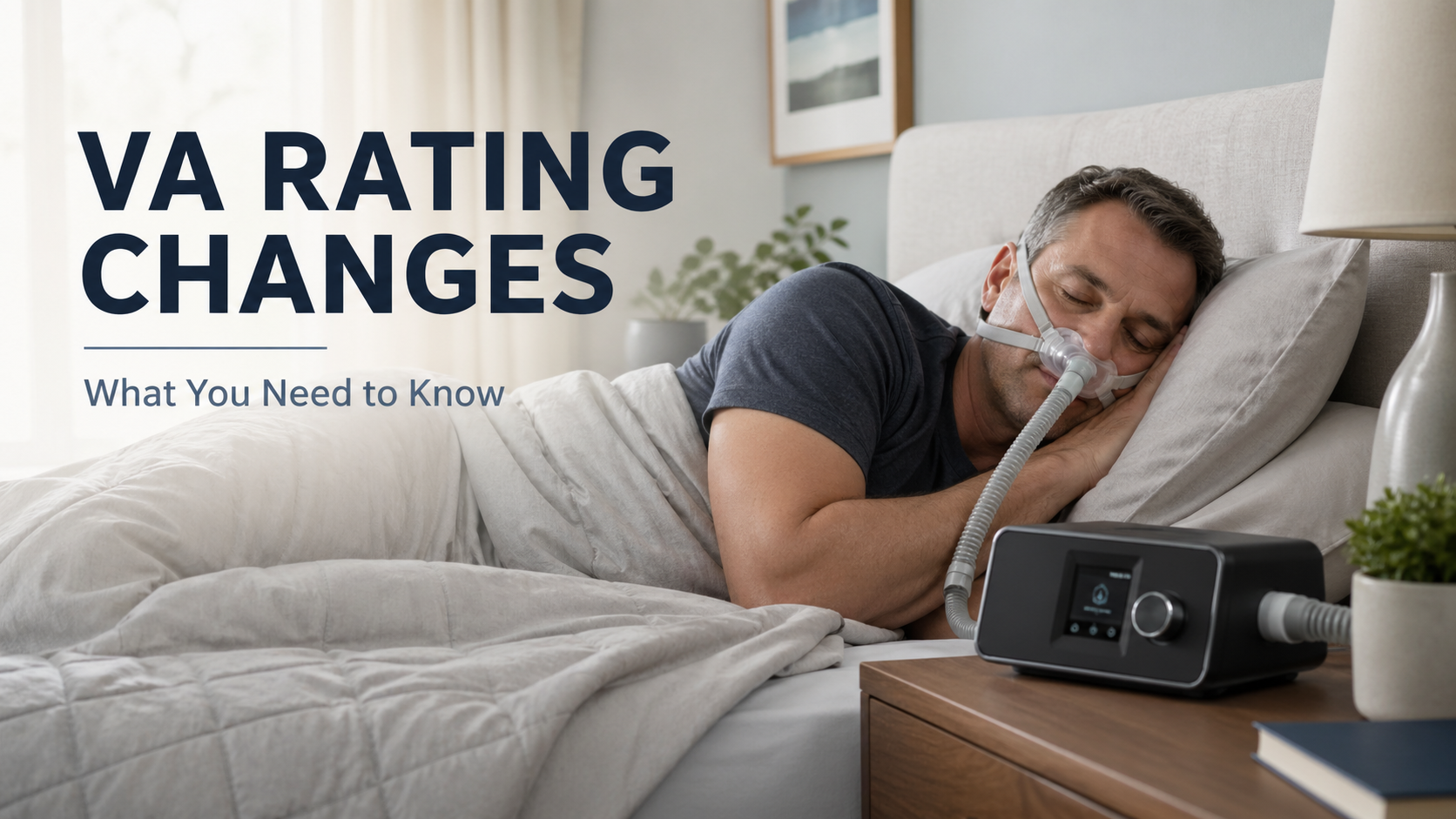
Under the current VA rating schedule, a veteran with sleep apnea requiring use of a breathing assistance device, such as a CPAP, may qualify for a 50 percent rating. That’s why the proposed change has gotten so much attention.
VA’s proposed respiratory changes would move away from the current CPAP-focused rating structure and toward ratings based more heavily on remaining symptoms and functional impairment after treatment. In plain English, that could mean lower ratings for some future sleep apnea claims if the proposed rule becomes final.
But this is the part you need to hear clearly:
the proposed sleep apnea change is not final as of April 2026.
That means the current rules still matter. If you have sleep apnea, use a CPAP, and believe the condition is connected to service, this may not be the time to sit on the claim and hope VA makes things simpler. VA has never been accused of making things simpler except to deny you.
Is the 10 Percent Tinnitus Rating Going Away?
Not right now.
Under the current schedule, recurrent tinnitus can still be rated at 10 percent. The concern comes from VA’s proposed auditory changes, which could eliminate tinnitus as a standalone compensable condition for many future claims and instead treat it as part of another underlying condition, such as hearing loss, traumatic brain injury, or another diagnosed disorder.
Again, proposed does not mean final.
If you already have a tinnitus rating, the proposed rule does not mean VA automatically takes it away. Existing ratings usually have protections, and VA generally needs a proper legal basis to reduce a rating. But if you have tinnitus and haven’t filed, waiting may not help you.
Tinnitus claims are simple in theory, but that doesn’t mean VA gets them right. The key is showing current tinnitus, credible in-service noise exposure, and a connection between the two.
Are Mental Health Ratings Changing?
VA also proposed changing how it rates mental health conditions, including PTSD, depression, anxiety, and related disorders.
This proposed change may actually help some veterans. The current mental health rating formula focuses heavily on occupational and social impairment. The proposed changes would use a more structured approach that looks at different areas of functioning. VA stated that the mental health proposal was intended to reflect modern medical understanding and DSM-5 concepts.
For veterans, the practical point is this: mental health claims still depend on evidence.
A diagnosis matters. Treatment records matter. Personal statements matter. Buddy letters matter. So do work history, relationship problems, sleep issues, panic attacks, anger, isolation, suicidal ideation, memory problems, and trouble adapting to stress.
Whether the old rule applies or a future rule eventually takes over, veterans shouldn't undersell their symptoms. VA can only rate what the evidence shows. If the record makes your condition look mild because you’ve been minimizing it for years, VA may treat it as mild.
Can VA Lower Your Rating Because Medication Helps?
This issue caused a lot of anxiety in early 2026.
On February 17, 2026, VA issued an interim final rule called “Evaluative Rating: Impact of Medication.” The rule raised concerns that VA could rate certain disabilities based on how they appear with medication or treatment, rather than how severe they are without that treatment. VA then rescinded the rule on February 27, 2026, restoring the prior regulatory text.
That rescission matters. But the controversy also shows why you need to pay attention to how your condition is documented. If medication helps you function, that doesn’t mean the underlying condition disappeared. It may mean you’re managing it through ongoing treatment. That distinction matters.
For example, a veteran with migraines may have fewer attacks because of medication, but still have serious episodes when migraines break through. A veteran with a mental health condition may seem more stable because of medication and therapy, but still struggle with sleep, panic, isolation, anger, concentration, or work stress. A veteran with a respiratory condition may use treatment every night just to function the next day.
The evidence should explain the whole picture, not just the best day.
Should Veterans File Before the Rules Change?
If you have a valid claim, the safest answer is usually: don’t wait for VA to change the rules before you protect your effective date. Filing a claim can preserve the earliest possible effective date if the claim is granted. Waiting can cost months or years of benefits. And if VA later finalizes less favorable rating criteria for certain conditions, future claims may be judged under those new rules.
That doesn’t mean every veteran should throw together a sloppy claim just to get something filed. A rushed, unsupported claim can still get denied. But veterans should at least consider filing an intent to file, gathering evidence, and getting advice before assuming they’re better off waiting.
This is especially true for claims involving sleep apnea, tinnitus, mental health conditions, migraines, orthopedic conditions, toxic exposure, and secondary service connection.
What Veterans Should Do Now
First, figure out whether you have a condition that may be connected to service. That includes conditions that began in service, worsened in service, developed after service because of another service-connected disability, or may be linked to toxic exposure.
Second, look at what evidence you already have. Do you have a diagnosis? Treatment records? Service records? A current rating decision? A denial letter? A C&P exam? A private medical opinion? Buddy letters? A personal statement?
Third, don’t assume VA will connect the dots. VA often needs the theory spelled out clearly. For example, sleep apnea may be claimed directly, secondarily to another condition, or sometimes through intermediate factors like weight gain caused by service-connected orthopedic or mental health conditions. Tinnitus may depend heavily on credible noise exposure. Mental health ratings often turn on the actual impact of symptoms, not just the diagnosis.
Fourth, be honest about severity. Don’t exaggerate. Don’t minimize. Explain what your condition looks like on bad days, how often those days happen, and how it affects work, family, sleep, concentration, movement, or daily life.
Finally, pay attention to deadlines. If VA denied your claim, you may have appeal options, but those options are time-sensitive. Missing a deadline can cost you an earlier effective date. And in VA claims, effective dates are money. That’s not greed. That’s math with consequences.
The Bottom Line
Yes, VA has proposed rating changes that could affect future claims for sleep apnea, tinnitus, and mental health conditions. Yes, veterans are right to pay attention. And yes, the medication rule controversy made people nervous for a reason.
But as of April 2026, the major proposed changes for sleep apnea, tinnitus, and mental health are not final. The current rules still apply. The mistake would be waiting until after the rules change to start thinking seriously about your claim.
If you’re thinking about applying for VA benefits, or if VA already denied your claim, this is a good time to review your options. At
Valor Veterans Law, we help veterans understand what evidence they need, what rating rules apply, and how to build claims that protect the strongest possible effective date.
If your service left you with injuries, symptoms, or conditions that still affect your life, don’t assume VA will figure it out on its own. Apply for the benefits you earned, and make sure the claim is built to show what’s really going on.
Because in the VA system, having the truth on your side is important. Making VA actually see it is the hard part.